The Origins of Jerusalem: From a Sunset to a Sacred Land
Around 2000 to 1500 BC, a group of people called the Canaanites lived in the mountains of the Middle East. Their language was Semitic, and…
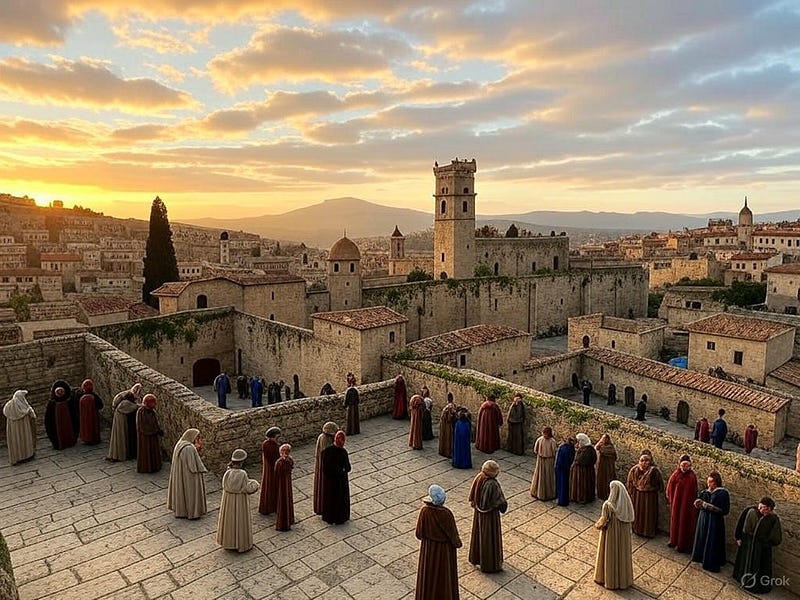
Around 2000 to 1500 BC, a group of people called the Canaanites lived in the mountains of the Middle East. Their language was Semitic, and they believed in many gods. One of their gods, Salem, was known as the protector from the dangers of the night. To pray to him, they searched for a high place where the sunset was clearly visible. Eventually, they found such a spot and believed Salem himself led them there.
The word “Yeru” in Semitic means “established,” and since they believed this place was founded by Salem, they named it Yeru-Salem — Jerusalem, meaning “Established by Salem.”
✝️☪️✡️ Three Religions, One Sacred City
Over time, Jerusalem became holy to three major religions:
- Islam: Muslims believe Jesus (Isa) is a prophet sent by God, and he will return before the Day of Judgment. Their holy book is the Qur’an, and they honor Al-Aqsa Mosque in Jerusalem as their first Qibla (direction of prayer).
- Christianity: Christians believe Jesus is the Son of God and their Savior. Their holy book, the Bible, is divided into the Old and New Testaments. They believe Jesus was crucified in Jerusalem.
- Judaism: Jews believe Moses was the final prophet. Their holy book is the Torah, which is part of the Christian Old Testament. For them, Jerusalem is where King David built Israel’s capital and Solomon built the first temple.
⚔️ The Crusades: Faith Meets Bloodshed
As followers of all three religions considered Jerusalem sacred, conflict was inevitable. The city changed hands many times, but things became worse in 638 AD, when Arab Muslims took control. Later, in 1077 AD, the Seljuks restricted Christians from visiting Jerusalem.
This led to the First Crusade in 1096, when about 60,000 soldiers from Europe marched to reclaim the city. Though the first attempt failed, a second and stronger army captured Jerusalem after a long siege. Tragically, around 70,000 people were killed — including Muslims, Jews, and even some Christians.
More Crusades followed, but Muslims eventually regained control. In between all of this, Jews were caught in the middle, often blamed and attacked by both sides.
The Birth of Israel and the Rise of Conflict
Centuries later, in 1896, a man named Theodor Herzl started a movement called Zionism, which aimed to create a homeland for Jews. The location? Palestine, which was then part of the Ottoman Empire. Jews began buying land and moving there.
After World War I, the Ottoman Empire collapsed, and Britain took control of Palestine. Britain promised the Jews a homeland, known as the Balfour Declaration in 1917. After the horrors of Hitler’s Holocaust, where 6 million Jews were killed, many Jews fled to Palestine.
In 1947, the United Nations proposed a plan: split Palestine into two countries — Israel for Jews and Palestine for Arabs. Jerusalem would be international. Jews accepted, but Palestinians rejected. In 1948, Israel declared itself a state, and war broke out.
Israel not only defended its land but also captured more territory. Palestinians lost their homes, many becoming refugees in their own land.
More Wars and the Division of Palestine
- 1967: In the Six-Day War, Israel captured Gaza, the West Bank, and more land.
- The PLO (Palestine Liberation Organization) was created to reclaim Palestinian land.
- In 1993, under the Oslo Accords, Israel and the PLO agreed to a peace deal. A new Palestinian government, the PNA (Palestinian National Authority), was formed in the West Bank.
Israel divided the West Bank into:
- Area A: Controlled by Palestinians
- Area B: Shared control
- Area C: Controlled by Israel
But peace didn’t last. A group called Hamas, formed with a goal to destroy Israel, rejected the peace deal.
A Land Divided
In 2006, Hamas won elections, defeating the PNA. A year later, civil war broke out between Hamas and the PNA. Since 2007:
- West Bank = Controlled by the PNA
- Gaza = Controlled by Hamas
Today, there are three key players:
- Israel, now a powerful nation.
- Hamas, fighting to reclaim all of Palestine through war.
- PNA, seeking peace through compromise.
And then there’s a fourth group — the innocent civilians, often forgotten, whose lives are lost in bombs, bullets, and bloodshed. They never wanted war. They just wanted peace.
Final Thoughts
Jerusalem and Palestine are not just pieces of land. They carry the weight of faith, blood, dreams, and history. From the god Salem to modern-day protests, from Crusaders to politicians, this land continues to echo the hopes and heartbreaks of generations.
Let us not forget the real cost of war — the people who live and die without ever choosing sides.